This Small Cap is Addressing Nuclear's Most Expensive Problem and is Still Overlooked

Please before diving in, read this disclaimer.
This edition follows naturally the last edition.
The Most Expensive Problem in the World
There is a moment, somewhere deep inside a nuclear project, where everything gets impossibly hard.
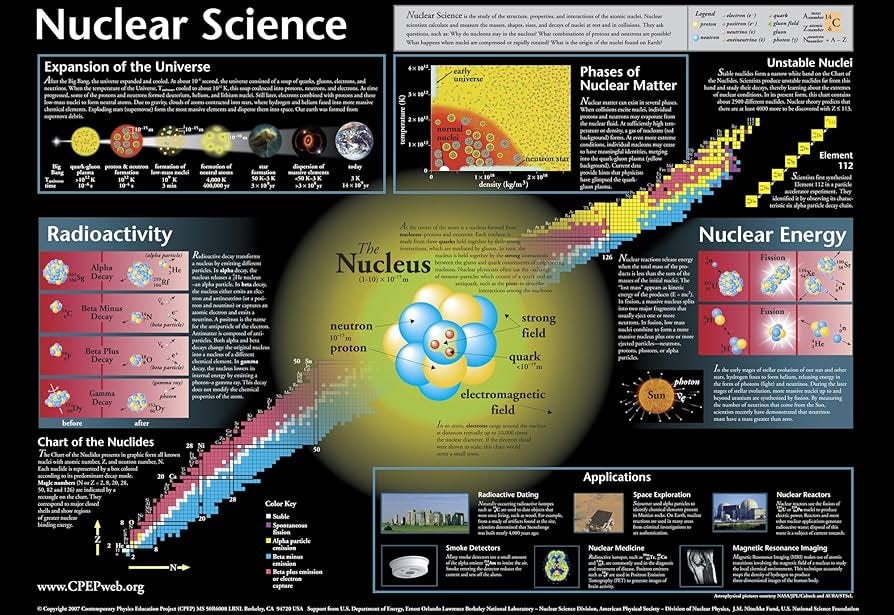
Don’t go too fast, no, not the physics. The physics were solved decades ago now and I believe the hard part is everything else. For instance, the 40,000 technical documents that need to be produced, cross-referenced, validated, and signed off before a single cubic meter of concrete gets poured.
Triangulation.
The regulatory dossiers that run to tens of thousands of pages, reviewed by nuclear safety authorities who have every right, and every reason, to send-them-back.
Stuff like the seismic calculations, the cooling system designs, the containment architecture, the emergency protocols, the materials certifications. The sheer, crushing, beautiful complexity of building something that has to work perfectly for 60 years, next to a river, in a country with its own standards, its own regulator, its own political sensitivities, and its own definition of “acceptable risk.”
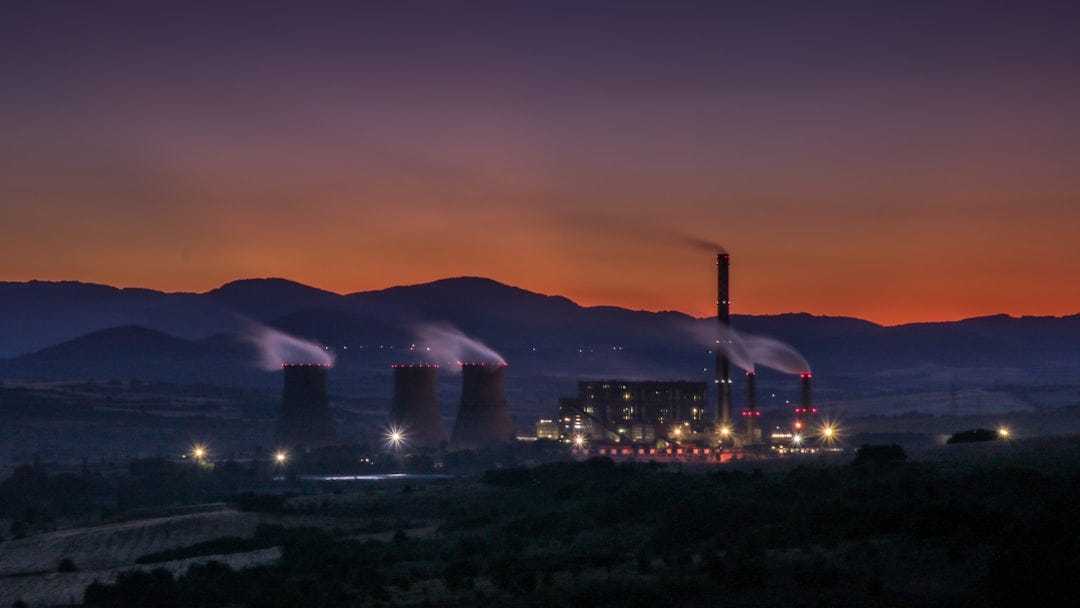
A nuclear power plant is not an energetic building like solar panels. It has more the level of importance of a civilization-scale commitment, rendered in steel and concrete.
And here is what that means in practice: you cannot improvise your way through it. You cannot hire generalists and figure it out as you go, you cannot watch a few YouTube tutorials and show up on site with a clipboard.
The knowledge required to design, permit, build, commission, and operate one of these facilities took half a century to accumulate. It lives inside a small number of people, in a small number of organizations, scattered across a small number of countries. It is, in the most literal sense possible, irreplaceable. (Moat).
The world has spent the last 15 years rediscovering this the hard way.
After Fukushima in 2011, governments panicked. Germany shut its plants overnight. Switzerland, Belgium, and Japan followed in various forms. New construction ground to a halt across Europe and North America. The industry contracted. Engineers retired or moved on. Young people chose other careers. The institutional knowledge that took generations to build started, quietly, to disperse.
Then reality caught up.
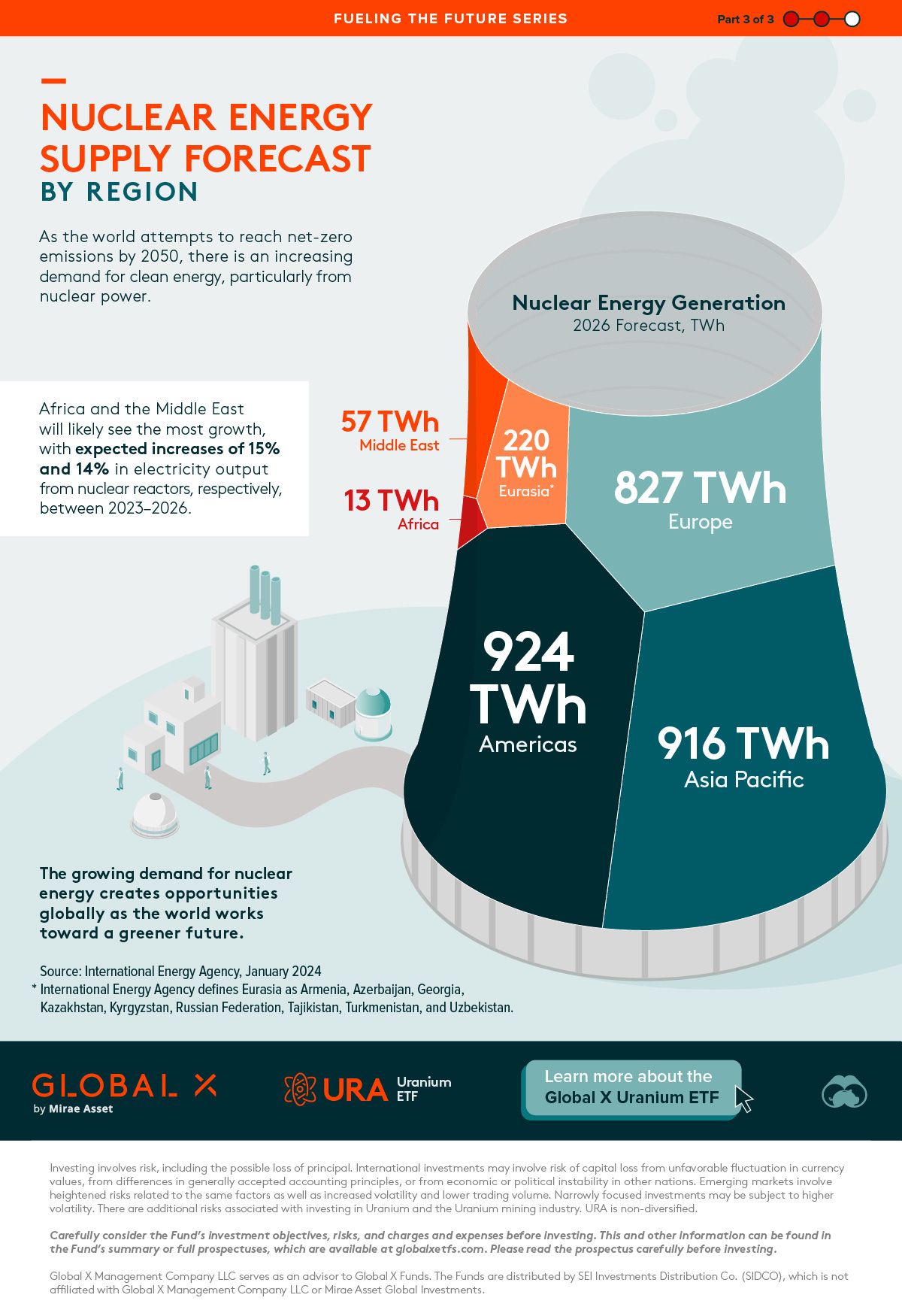
The energy transition turned out to be more complicated than an undergraduate’s PowerPoint slide. Renewables, for all their progress, cannot provide the baseload power that modern economies require, we see it today. A data center cannot run on intermittent solar, a steel mill cannot be decarbonized with wind alone and the math of electrification, done seriously, points to one conclusion that makes a lot of people uncomfortable: you need a lot of carbon-free electricity, available 24 hours a day, 365 days a year.
Nuclear is the only proven technology that delivers that at scale.
So governments started changing their minds.
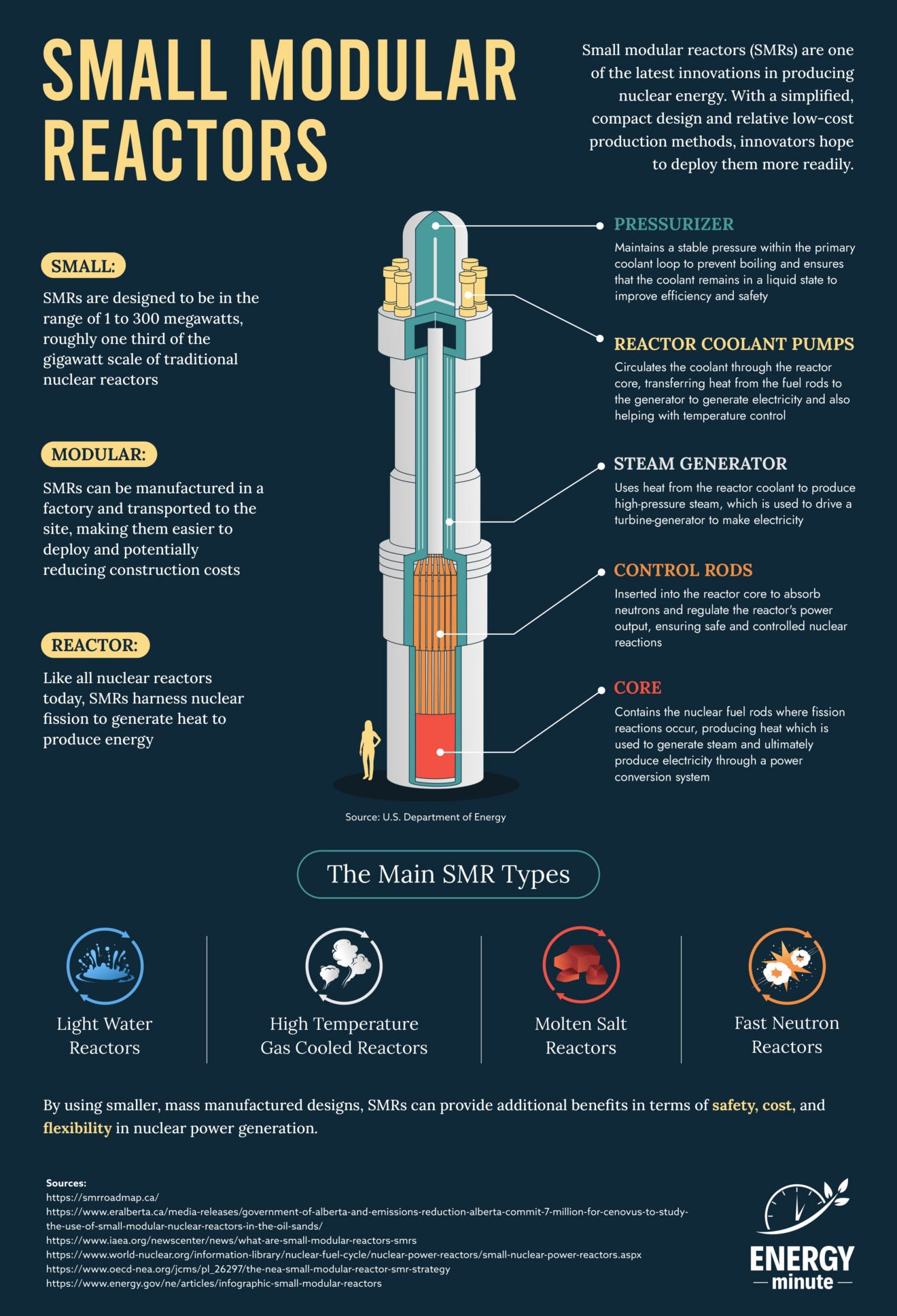
France announced a program to build up to 14 new reactors: the largest nuclear construction program in the Western world in 40 years. The UK committed to Hinkley Point C and began planning more. Poland signed agreements for its first nuclear plants. The Netherlands reversed its phase-out. The United States passed the biggest clean energy bill in its history, with nuclear at its center. Saudi Arabia, the UAE, South Korea, India, and a dozen other countries accelerated their own programs... Small Modular Reactors, a technology that barely existed on paper a decade ago, attracted billions in private capital almost overnight.
The renaissance was real. The political will was there. The financing was being assembled.
There was just one problem.
The people who know how to do this had been leaving the industry for 15 years.
You cannot build a nuclear reactor with enthusiasm and capital alone. You need licensed engineers who understand nuclear safety codes, you need project managers who have spent decades navigating the specific, unforgiving logic of nuclear-grade construction. You also need specialists who can read a P&ID, write a safety case, and sit across the table from a nuclear regulator without flinching.
That expertise has a very long formation curve. You cannot manufacture it quickly, at least not at political rhythm. You cannot import it from another industry either. It either exists inside an organization, built up over decades, or it does not exist at all.
This is the most expensive problem in the energy transition. Not the cost of the reactors themselves (everybody can go in debt to fund these). The cost of the knowledge required to build them correctly.
Governments know it, utilities know it, the big energy companies writing the checks for these projects know it extremely well. And they are willing to pay significantly, reliably, on long contracts to anyone who can walk through the door with that expertise fully assembled and immediately deployable.
(France is even considering asking for retired expert in the field to help train new generations…)
Which brings us to a company that has been building exactly that expertise, in exactly that niche, for exactly 60 years.
A company that most investors have never heard of.
A company trading at what looks, on the surface, like a nonsensical valuation, which turns out to be one of the most interesting accounting illusions in European small-cap markets.
A company sitting at the precise intersection of the nuclear renaissance, the energy sovereignty wave, and the global scramble for irreplaceable technical expertise.
We ran it through 16 questions. The answers changed how we think about it.
Our 12 Questions for this company
1. This European small-cap has ranked in the global top 3 of its niche for 10 consecutive years. Why hasn’t the market re-rated it yet?
2. The displayed P/E is really high and triggers every automated screener to skip it instantly. What if that’s precisely why the price is still here?
3. A government program spanning 20 years has just been officially launched. How many years of backlog visibility does that translate into, concretely, contractually, today?
4. International revenue is growing twice as fast as domestic. Which 3 markets could realistically double the size of this business by 2030? Operating margins have improved every year since the restructuring. Where is the sector ceiling, and how far are we from it?
5. A next-generation technology is attracting tens of billions in public and private capital. This company is one of the very few with the expertise to support it at scale. Who else can, really?
6. A dominant domestic client just announced the largest investment program in its history. What does that mean for the next five years of revenue visibility, in hard numbers?
7. A recent foreign acquisition opens a market where several tens of billions of dollars in projects are actively entering the launch phase. What is the realistic timeline to capture a meaningful share?
8. Two of the most powerful macro trends of the decade are converging on this sector simultaneously. This company is positioned at the exact intersection of both. Are investors pricing either one in?
9. The founder-CEO spent decades transforming a generalist firm into a high-barrier pure-play. What does that kind of assembled expertise fetch on the M&A market, and who is already circling?
10. The current valuation implies the market doesn’t believe in backlog acceleration. What are the 3 concrete catalysts that could force a full revision of that conviction, and when do they hit?
11. The sector faces a global shortage of qualified specialists. This company has 60 years of internal training history. How much is that worth as a durable competitive advantage when everyone else is scrambling to hire?
12. If the government program accelerates by 18 months, what does the income statement look like in 2028? We ran the numbers. At what multiple should this company trade if you apply infrastructure asset logic to its recurring, long-cycle, government-backed revenue streams, instead of treating it like a generic services firm?
To be 100% honest, I am super bullish on this company, it might be one the best opportunity I covered on Hidden Market Gems.
We answered all 12. In full. With numbers, comps, and a clear position.
The full analysis, sector deep dive, financial breakdown, valuation framework, and our verdict, is available to paid subscribers. Gem Partners 🩶
If you’ve read this far, you already know this is the kind of opportunity that doesn’t show up on a Bloomberg screen.
It shows up here, on Hidden market Gems.